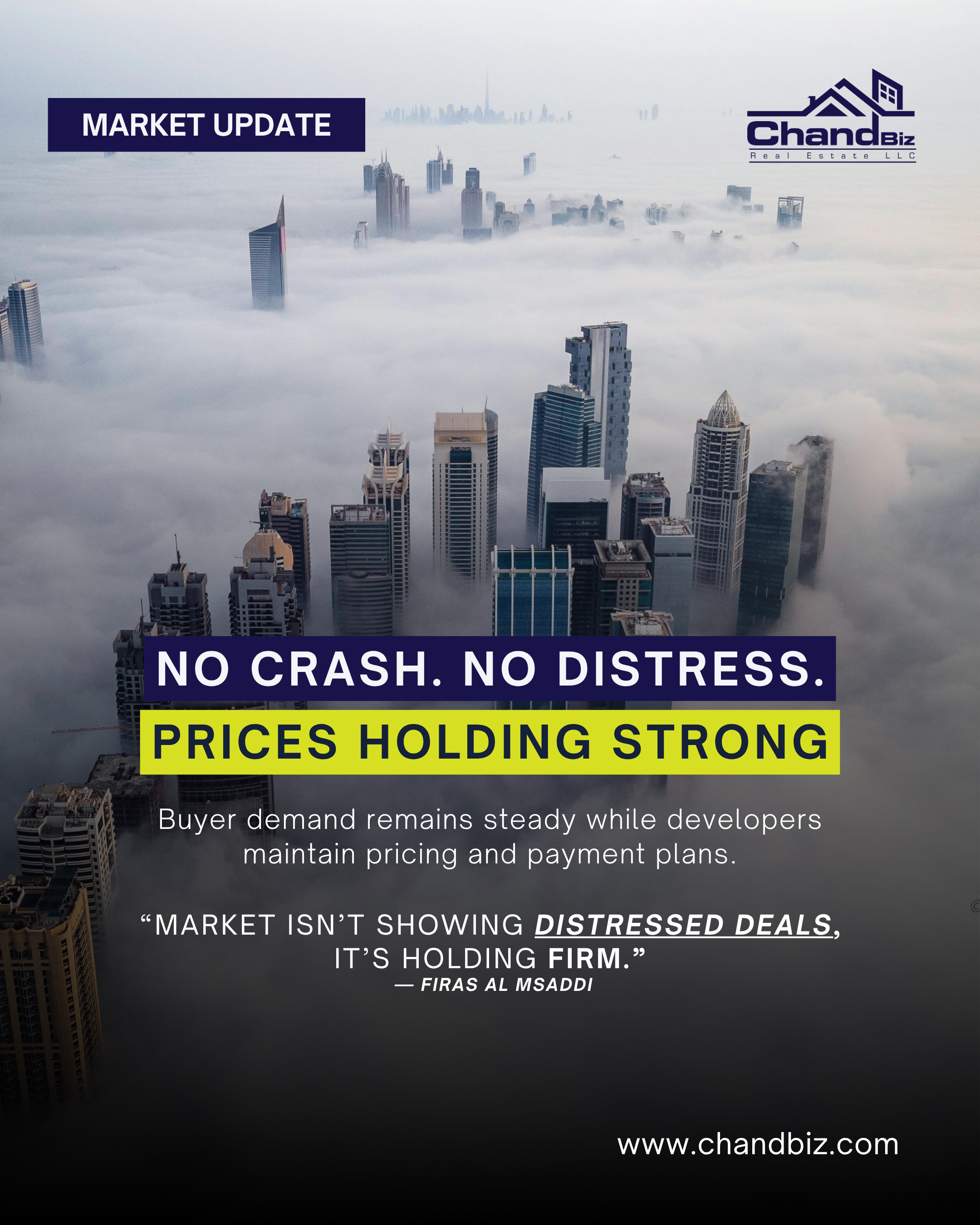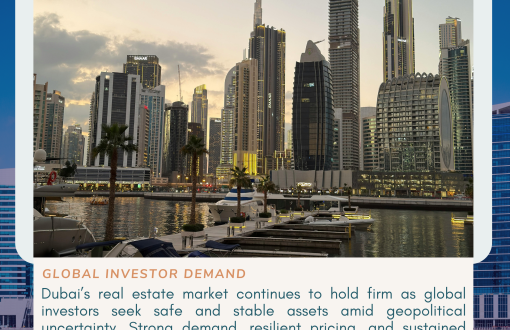

Recent speculation around a potential downturn in Dubai’s real estate market has sparked concern among investors. However, industry leaders are pushing back against claims of falling prices and distressed sales, مؤكّدين أن السوق لا يزال مستقرًا ويعمل بتوازن.
According to Firas Al Msaddi, there is currently no meaningful volume of distressed assets in the market. While some buyers are actively searching for discounted opportunities, the reality on the ground tells a different story.
“We’re not seeing assets with significant price drops in any meaningful volume. Buyers looking for those opportunities are mostly finding a market that isn’t cooperating with that expectation,” he explained.
Strong Developer Positioning
Leading developers such as Emaar Properties and Aldar Properties continue to demonstrate confidence in the market. Both companies have maintained stable pricing structures and consistent payment plans, reflecting their strong liquidity positions and robust asset portfolios.
This stability sends a clear signal: the market is not under pressure to correct in the way some had anticipated.
Demand Remains Steady
Despite geopolitical tensions in the region, buyer activity has not slowed significantly. Demand continues to be driven by:
UAE nationals
GCC investors
Long-term expatriate residents
Al Msaddi noted that while buyers are becoming more selective, they remain committed. At the same time, sellers are holding firm, creating a balanced market environment.
“Buyer demand is steady across most price ranges. Sellers are patient. Buyers are selective but committed. That equilibrium is holding.”
A More Mature Market
One of the key reasons behind Dubai’s resilience is the evolution of its real estate sector. Compared to previous cycles, the market today is supported by:
Higher-quality, end-user buyers
Reduced speculative activity
Stronger regulatory oversight
Proactive government response to uncertainty
According to Al Msaddi, these factors have helped Dubai “earn its resilience,” allowing it to withstand external pressures more effectively than before.
Stock Market vs Property Market: Understanding the Difference
Lewis Allsopp addressed another misconception — the idea that falling stock prices of listed developers indicate a real estate downturn.
“The property market hasn’t dropped 30%. What has dropped is the share price of listed developers — and those are two fundamentally different things.”
He explained that stock market movements are forward-looking and often reflect investor sentiment rather than actual property values. In times of geopolitical uncertainty, such reactions are expected.
Importantly, companies like Emaar Properties and Aldar Properties remain financially strong, with no signs of distress.
What This Means for Investors
For investors, the current landscape presents a nuanced picture. While the anticipated wave of distressed deals has not materialized, the market continues to offer:
Stability
Strong fundamentals
Long-term growth potential
As Allsopp suggests, periods of uncertainty can often create strategic entry opportunities, particularly for those with a medium- to long-term outlook.
Final Thoughts
Dubai’s real estate market is not experiencing a crash — it is demonstrating resilience. With stable pricing, sustained demand, and strong institutional backing, the sector continues to hold its ground despite global and regional challenges.
For investors willing to look beyond short-term noise, Dubai remains one of the most attractive and dependable property markets in the world.